

What Is an Experience Calculator?
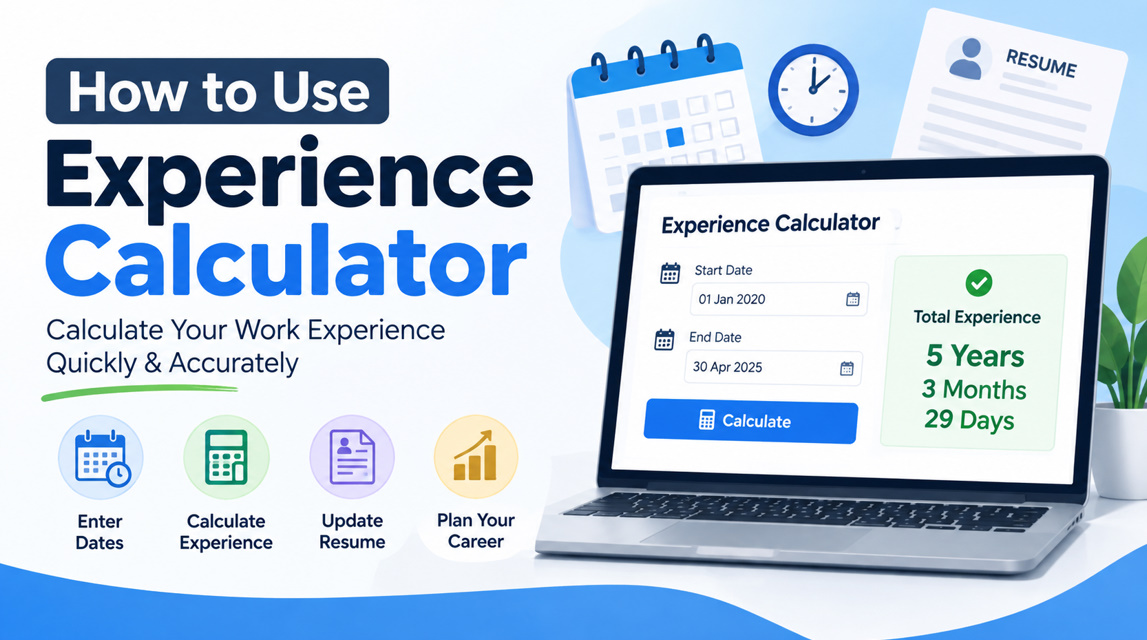
An Experience Calculator is an online tool designed to calculate the length of professional or personal experience between two or more dates. Instead of manually counting years, months, and days, users enter their starting and ending dates, and the calculator determines the total duration automatically. It can simplify employment history calculations for resumes, applications, records, and career planning.
Experience calculators are particularly useful when a person has worked at multiple companies or held several positions. Some advanced calculators can combine different employment periods to estimate total professional experience. By reducing manual date calculations, these tools make it easier to understand a complete career timeline and avoid common calculation mistakes.
- Calculates experience duration
- Uses employment dates
- Counts years and months
- Supports career timelines
- Reduces manual calculations
- Helps organize work history
- Simplifies date differences
- Provides quick results
Why Use an Experience Calculator?
Calculating professional experience manually can become confusing when employment periods span several years or include different months and days. An experience calculator online provides a convenient way to determine the exact duration of employment. It can help users calculate work experience for resumes, job applications, interviews, promotions, and professional documentation.
The tool is also useful when several employment periods need to be reviewed. For example, someone may have worked for one company from 2018 to 2021 and another from 2022 to 2025. Calculating each period separately can make a career history easier to understand and verify. This makes an experience calculator a practical tool for students, employees, job seekers, and professionals.
- Saves valuable time
- Improves calculation accuracy
- Organizes employment history
- Helps prepare resumes
- Supports job applications
- Simplifies career planning
- Reduces date-counting errors
- Makes results easy to understand
How to Use Experience Calculator Step by Step
Using an Experience Calculator is generally simple. First, identify the start date of the experience you want to calculate. Next, enter the relevant end date. Depending on the calculator, you may also have options for adding multiple employment periods. After entering the information, select the calculate button to generate the experience duration.
Always check that the dates have been entered correctly before reviewing the result. If your experience includes multiple jobs, internships, freelance projects, or other professional periods, enter each period according to the calculator’s instructions. The final result may display your experience in years, months, and days, giving you a clearer understanding of your total work history.
- Find the start date
- Find the end date
- Enter both dates
- Add additional periods
- Review entered information
- Select calculate
- Check the final result
- Record the duration
How to Calculate Work Experience Accurately
Accurate work experience calculation starts with reliable employment dates. Your joining date and leaving date should come from official records whenever possible. Employment contracts, experience letters, HR records, payslips, or previous resumes can help confirm the dates. Entering an incorrect month or year can change the final duration.
When calculating multiple jobs, avoid accidentally counting overlapping periods twice. For example, if two employment periods overlap, simply adding their durations may produce an inflated total. An experience calculator can help organize individual periods, but users should still review the timeline carefully and understand how the specific tool handles overlapping employment dates.
- Verify joining dates
- Verify leaving dates
- Check month values
- Check year values
- Review overlapping periods
- Avoid duplicate entries
- Compare calculated results
- Keep supporting records
How to Calculate Experience for Multiple Jobs
Professionals often have experience from several employers, internships, contracts, or freelance assignments. A total experience calculator can make this process easier by allowing users to examine each employment period individually. Enter the start and end dates for every position, then review the calculated duration for each period before determining the overall experience.
For example, a person may have three years of experience at one company and two years at another. If the periods do not overlap, their durations can generally be combined to understand the total career timeline. However, overlapping dates require careful review. The goal is to create an accurate representation of actual professional experience rather than simply adding every date range together.
- List every employer
- Record each start date
- Record each end date
- Calculate periods separately
- Identify overlapping dates
- Review individual results
- Combine valid periods
- Confirm total experience
Benefits of Experience Calculator
One of the biggest benefits of Experience Calculator is convenience. Instead of manually determining the difference between dates, users can obtain a result within seconds. This is especially helpful for people with long employment histories. A digital calculator can also make career information easier to organize when preparing a resume or professional application.
Another important advantage is consistency. Manual calculations can lead to mistakes involving different month lengths, leap years, or incomplete date ranges. An online experience calculator handles these date differences automatically according to its calculation method. While users should still verify important employment information, the tool provides a useful starting point for accurate experience tracking.
- Fast date calculation
- Easy to operate
- Beginner-friendly interface
- Fewer manual errors
- Useful for resumes
- Helps track career growth
- Supports employment records
- Simplifies professional planning
Common Mistakes When Using an Experience Calculator
Although an Experience Calculator is easy to use, incorrect input can produce an incorrect result. One common mistake is entering the wrong joining or leaving date. Another is confusing the day and month fields, particularly when using different date formats. Users should carefully review every entry before calculating their experience.
Another frequent problem occurs when people calculate overlapping employment periods. If a person worked two jobs during the same months, adding both periods without considering the overlap may overstate total experience. It is also important to understand whether the calculator includes the start date, end date, or both when determining the final duration.
- Enter dates carefully
- Check date format
- Avoid wrong years
- Confirm employment periods
- Watch for overlaps
- Review calculator settings
- Don’t duplicate experience
- Verify important results
Practical Uses of an Experience Calculator
An Experience Calculator can be useful in many everyday professional situations. Job seekers can use it to review their total work experience before completing an application. Employees can track career milestones, while recruiters and HR professionals may use date calculations when reviewing employment histories. Students can also calculate internship or training durations.
The tool can support resume preparation, career planning, professional profiles, employment verification, and personal record keeping. However, calculated experience should match the information contained in official documents whenever accuracy is important. An experience calculator is best viewed as a convenient calculation tool rather than a replacement for employment records or organizational policies.
- Resume preparation
- Job applications
- Career planning
- Internship tracking
- Employment records
- HR documentation
- Professional profiles
- Experience verification
Tips for Getting Better Results
For the most reliable result, prepare your employment information before using the calculator. Make a simple list of employers, positions, start dates, and end dates. This approach makes it easier to identify missing information and overlapping periods. It also provides a clear career timeline that can be checked before submitting an application.
Use the same date format consistently and review the calculator’s output carefully. If the result appears unexpected, check your original dates rather than immediately assuming the calculator is incorrect. For important applications, compare the calculated duration with official employment documentation. Keeping an updated experience record can also make future calculations faster and easier.
- Prepare dates beforehand
- Use consistent date formats
- Check every entry
- Keep employment records
- Review overlapping periods
- Compare important results
- Update your career timeline
- Save useful calculations